I was elevated to Partner position in a firm where I had served as a manager for almost ten years. As a manager I had gained valuable technical knowledge and professional experience. However, accepting the position as a Partner brought a sea change in my responsibilities and in the expectations of everyone I worked with and professionally interacted with. I soon realized that while there are some lessons we learn in a classroom, leadership brings its own lessons that only experience can teach us. That leadership isn’t just a title or a responsibility, but a gamut of various skills coupled with attitude.
I remember discussing my challenges and teething troubles in the new role with a friend-cum-mentor. We both agreed that learning from one’s own experience may not always be effective as most of the time we lose objectivity, and the process can get sluggish if there is no appropriate training. That’s when he suggested that I attend the Leadership Retreat organized by BCAS.
At first, I hesitated, wondering how leadership could be learnt in a two-day Retreat. My friend explained that the Retreat, in fact, was designed around a particular facet of leadership – this one was based on Chanakya. The thought that Chanakya himself would guide me in my professional and personal life was an intriguing one. I signed up and attended the Retreat – which proved to be the best investment I had made for myself.
Naturally, this one-time experience turned into a yearly ritual, and I then went on to attend two more Retreats. The first Retreat had explored Chanakya’s approach to leadership, focusing on Decision-making. The second one drew inspiration from Lord Krishna as an effective communicator, highlighting Communication. The third one focused on Empathy i.e., understanding the people we lead and resolving conflicts by looking beyond our own perspectives. Looking back, I find myself connecting the lessons learnt through a simple framework: The C-D-E of Leadership (Communication, Decision-making, and Empathy).
Communication (C): The Art of Connecting
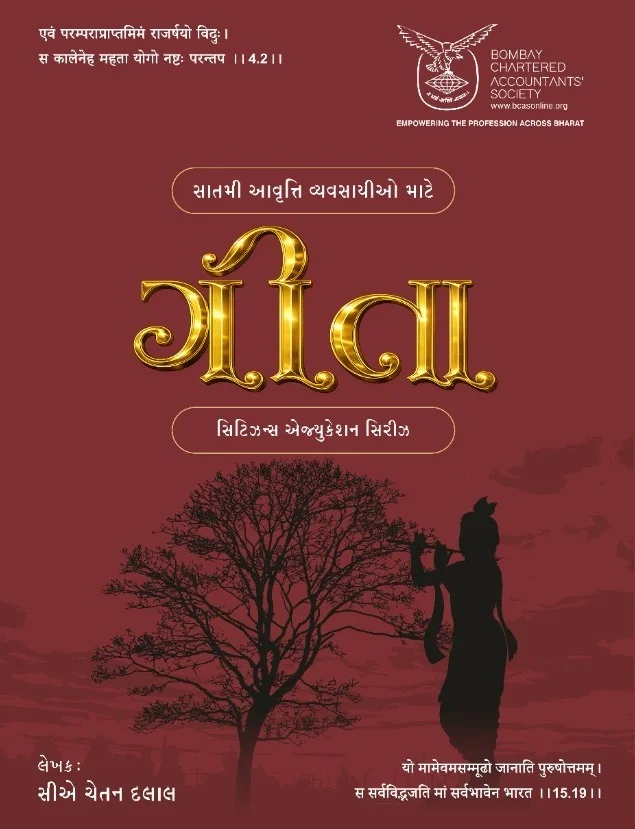
The Retreat which explored Lord Krishna as an effective communicator, emphasized not merely speaking well, but communicating in a manner which influences, reassures, and inspires. On the battlefield of Kurukshetra when Arjuna faces profound dilemma and struggles to reconcile emotions and responsibilities, Lord Krishna does not simply proceed to instruct him. He engages Arjuna in a dialogue, addresses his doubts, and presents perspectives that help him understand his duty. The lesson here is significant: communication is not about making people hear you; it is about helping them understand, reflect, and act.
At work, one instance stands out for me – my audit team discovered a significant discrepancy close to reporting deadline. The older me would have gotten flustered, reprimanded the team, and demanded immediate action. However, I chose to explain the implications to them, establish priorities, listen to their concerns, and guide them towards a solution. The difference didn’t lie in technical knowledge, but the way I communicated it. A message that fails to connect can lose its impact.
Decision-making (D): The Wisdom to Choose
The Retreat which drew inspiration from Chanakya, whose understanding of strategy, governance and statecraft offers valuable leadership lessons, was centred around decision-making as a critical leadership skill. Every professional encounters certain situations where there could be competing priorities, incomplete information, conflicting interests, or consequences that cannot be fully predicted. An effective leader must weigh alternatives, assess risks, and make a choice, while accepting responsibility for the outcome.
When a new audit team member encounters an unfamiliar situation, I encourage them not to blindly follow the previous year’s approach. Instead, I guide them to evaluate the available information, explore possible alternatives, and arrive at a reasoned conclusion. This is how I seek to instil Chanakya’s approach to decision-making, nurturing the ability to think independently, take ownership and exercise sound judgement rather than merely follow instructions.
Empathy (E): Understanding Before Responding
The third Retreat I attended focused on empathy, particularly its role in resolving conflicts. Empathy is the ability to understand another perspective without surrendering one’s own principles. In the CA profession, where deadlines and client expectations create considerable pressure, empathy helps us give feedback without humiliating people, resolve disagreements without making them personal and hold individuals accountable without diminishing their dignity.
I had a team member who repeatedly missed deadlines and seeing this, I concluded that he lacked commitment. However, after attending the Retreat, I realized the role that empathy plays as a tool for conflict management. I sought to understand the root-cause and designed a system wherein we analysed whether he and other team members were struggling with workload, lacking clarity, or facing a capability gap. Understanding the reason does not mean accepting mediocre performance. It means responding with greater insight.
C-D-E: When Three Qualities Come Together
The real strength behind Communication, Decision-making and Empathy emerges when they work together. Imagine a difficult discussion with a client about a significant audit issue. Decision-making gives the auditor the conviction to arrive at an independent conclusion. Communication enables them to explain the issue and its implications. Empathy helps them understand the client’s concerns without compromising professional independence.
The C-D-E framework is not an exhaustive definition of leadership but gives me a starting point for developing the qualities that help me lead effectively. And these lessons have extended beyond the workplace to my family, friendships, and everyday interactions.
Beyond the Sessions: What makes the Retreats Special?
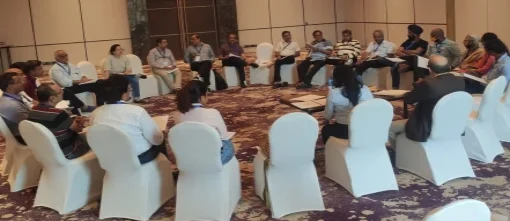
The leadership lessons are valuable, but what makes these Retreats particularly enriching is the way they are structured and the environment in which they are experienced. The sessions are interactive, encouraging all to reflect, exchange perspectives and relate concepts to situations in our professional and personal lives.
The learning does not end when the formal sessions conclude. The evenings bring a different energy. All the participants, and sometimes the faculty members too, play games, sing, dance, socialize and enjoy one another’s company. One gets to know each other as individuals, rather than merely as fellow professionals.
The participation of spouses adds another dimension to the experience. I was particularly fascinated to see in one Retreat how a pragmatic professional was complemented by a compassionate spouse, and how together they made a remarkable team. It reinforced the idea that leadership is a life skill, not merely professional competency and it is as relevant at home as it is in workplace.
Generations and Perspectives
Another remarkable feature is the diversity of participants. In conventional professional settings, interactions between juniors and seniors may remain formal and confined to assignments. At the Retreat, these boundaries soften.
I vividly remember a session on benevolence where a senior participant suggested that we should remain kind and forgive others, even when they wrong us. I offered a distinct perspective: while kindness is an essential leadership trait, it is equally important to set boundaries and avoid being taken advantage of. To my surprise, several participants resonated with my viewpoint, reinforcing my confidence in my own judgement as a leader and professional. It was a valuable reminder of how these Retreats foster a two-way exchange of perspectives that formal training alone may not offer.
My Next Retreat
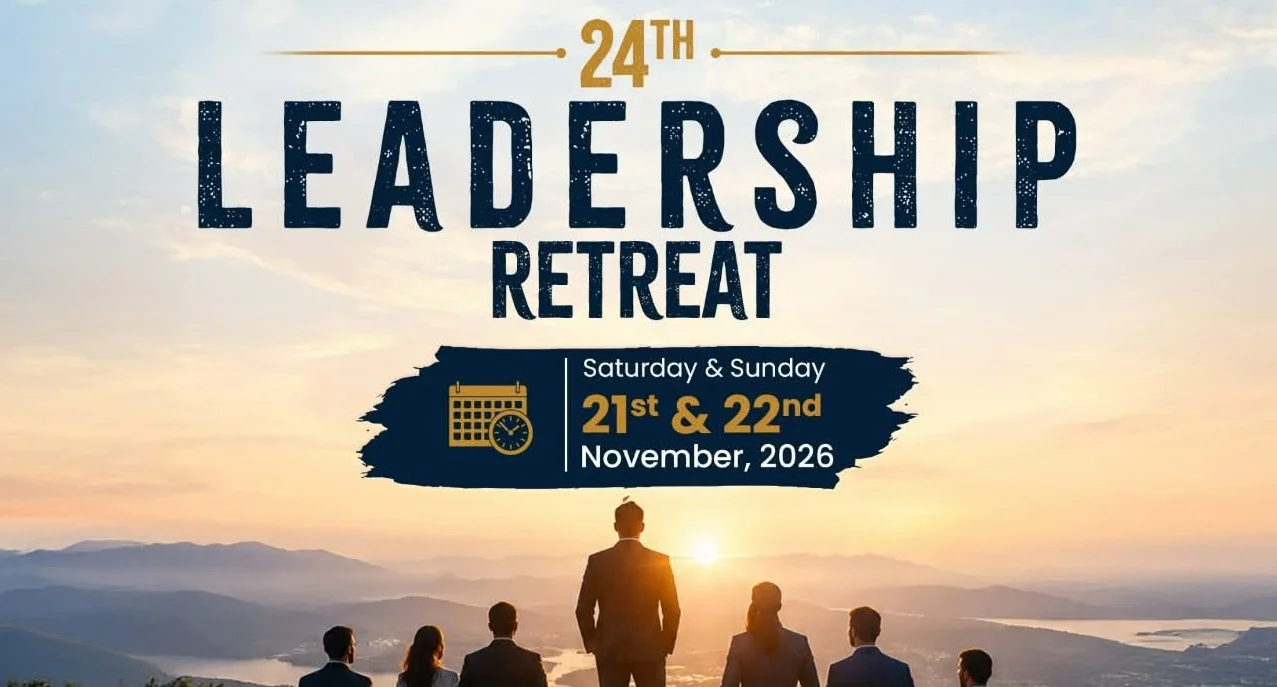
The three Leadership Retreats I have attended have left a lasting impression on me and contributed meaningfully to my growth as a leader. Such has been their impact that, this November, post-Diwali, I will be attending my fourth Retreat which focusses on Influence 360 Degrees. This time, I will attend not just as a participant but also as a coordinator. I have volunteered for this role. This is my way of giving back to a programme that has shaped me to be a better person and added immense value to my own leadership journey.
About : Rishikesh Joshi
Rishikesh Joshi is a Chartered Accountant with over 14 years of post-qualification experience in statutory audit and assurance, with significant exposure to the Banking and Financial Services (BFSI) sector.
He serves as the Convenor of the Accounting and Auditing Committee of BCAS and is an active member of its HRD Committee. He believes that professional excellence stems from a fine balance between strong technical knowledge and effective soft skills.
Beyond his professional pursuits, Rishikesh is a passionate dance enthusiast who enjoys performing on stage and training aspiring dancers. For him dance is a valuable means of self-expression, building confidence and developing discipline. The experience of teaching dance also provides him with an opportunity to connect with people and nurture creativity.
A devotee of the Art of Living, he also has a keen interest in meditation and spirituality. He feels that meditation helps cultivate inner calm, improve focus and manage the demands of professional life with greater clarity.
He can be contacted at rishikesh.online@gmail.com