Society News for the month of July 2026
Details:
1. Webinar on the Procedural Aspects of GSTAT held on Friday, 12th June 2026 @ Virtual
The Indirect Tax Committee of the Bombay Chartered Accountants’ Society (BCAS) successfully organized a webinar on “Procedural Aspects of GSTAT” on 12 June 2026.The webinar received an enthusiastic response from the professional community and was attended virtually by more than 700 members.
The session aimed to provide participants with practical insights into the procedural framework and operational aspects of the Goods and Services Tax Appellate Tribunal (GSTAT). The keynote address was delivered by Hon’ble Justice (Retd.) Dr. Sanjaya Kumar Mishra, President of GSTAT and Former Chief Justice of the Jharkhand High Court.
During the keynote session, valuable perspectives were shared regarding the role, functioning, and significance of GSTAT in the indirect tax dispute resolution mechanism. The technical session was conducted by Shri Vivek Chandel, Senior Consultant, NIC, who explained various technological and procedural facets associated with GSTAT.
The panelists highlighted practical aspects and key procedural considerations relevant for tax professionals and stakeholders in the interactive Question & Answer session, which was conducted after the above sessions, enabling participants to seek clarifications and engage directly with the experts and the same was skillfully moderated by CA Mandar Telang, who seamlessly guided the proceedings and facilitated meaningful engagement throughout the session.
The webinar concluded on a highly informative and engaging note, with participants appreciating the quality of discussions and practical insights shared during the session.
Scan to watch online at Youtube

2. Finance, Corporate & Allied Laws Study Circle – Climate Finance: Opportunities, Regulations & Future Outlook held on Friday, 5th June 2026 @ Virtual
The study circle was led by Dr. Chetana Asbe, who is certified in Climate Finance by CFA Institute. She commenced the session with climate fundamentals and key concepts. She broadly covered the following aspects in the session.
– Climate Finance’s scope, Ecosystem, Global and Indian regulatory landscape.
– Impact of Climate change on the business and finance.
– professional responsibility and opportunities in Climate Finance.
The interactive format of the session, complemented by practical examples, made it highly engaging. The session was insightful, and all participant queries were comprehensively addressed by Dr. Chetana Asbe
3. AI Adoption & Peer Review Readiness held on Friday, 29th May 2026 @ BCAS
The Accounting & Auditing Committee of the Bombay Chartered Accountants’ Society organised this full-day hybrid programme at BCAS Hall, Mumbai and through Zoom. The seminar focused on the practical implementation of Artificial Intelligence in professional practice, together with ICAI Peer Review preparedness and Audit Quality Maturity Model (AQMM) implementation. The programme witnessed participation from around 93 members across physical and virtual modes.
The programme commenced with an inaugural and overview session by CA Raman Jokhakar, setting the context on the growing role of technology and quality frameworks in the profession. CA Devang Doshi conducted an insightful session on practical use cases of AI tools in Audit and Tax, demonstrating how professionals can leverage AI for efficiency, automation and better decision-making.
CA Murtaza Ghadiali delivered a practical session on the use cases of IDEA software in Audit, Income Tax and GST assignments, highlighting data analytics and risk identification techniques. The post-lunch session by CA Amruta Kulkarni focused on Peer Review preparedness, covering documentation standards, quality control measures and practical expectations during peer review processes.
The programme concluded with an informative session by CA Padmashree Crasto on practical implementation aspects of the Audit Quality Maturity Model (AQMM), helping participants understand structured approaches towards enhancing audit quality and compliance standards.
The seminar witnessed enthusiastic participation and interactive discussions throughout the day, providing members with practical insights into integrating technology with professional compliance and audit quality requirements.
Scan to watch online at BCAS Academy

4. Direct Tax Laws Study Circle Meeting on Reassessment Provisions Under Income Tax Act 2025 held on Thursday 28th May 2026 @ Virtual.
The Direct Tax Laws Committee of BCAS organised this study circle session, covering the legal framework, judicial precedents, and practical strategies for handling reassessment notices.
1. Section 279 – AO can reassess escaped income and recompute losses/deductions. Reassessment is not a tool for review (CIT vs. Kelvinator of India Ltd.).
2. Reopening Notice (Sections 280 & 281) – Notice requires specific ‘information’ of escaped income; change of opinion does not suffice. Section 281 mandates a prior SCN with the information and an opportunity of hearing.
3. Section 282 – General limit: 4 years 3 months; extended to 6 years 3 months if escaped income ≥ Rs. 50 lakhs. No notice within 1 year from end of tax year.
4. Judicial Precedents – Reopening quashed on: no new material (Sapphire Foods, Alkem Laboratories); wrong authority (Skypak Travels); natural justice violation (Rajesh Kumar Agarwal); income below Rs. 50 lakh threshold (Sanath Kumar Murali).
5. JAO-FAO Controversy – Finance Act, 2026 retrospectively clarified via Section 147A (w.e.f. 1 April 2021) that JAO conducts the pre-assessment inquiry; NFAC completes reassessment in a faceless manner.
6. Validity of Section 147A – Sub judice before multiple High Courts; SC directed disposal by 30 September 2026. Pending writ petitions have an interim stay on reassessment proceedings.
7. Strategy – Raise all arguments at the first instance: change of opinion, time bar, wrong authority. Evaluate merits and exposure before choosing tax proceedings or writ petition.
The session was well-attended and generated active participation, providing practical clarity on the evolving reassessment framework under the Income Tax Act, 2025.
Speaker: Ujjval Gangwal, Khaitan & Co
5. ITF Study Circle meeting on “Recent Ruling in case of Bank of India on Issue of Foreign Tax Credit” held on 19th May 2026@ Virtual.
The Chairman of the session addressed the participants on the key aspects of the Background and Core Issues discussed in the Judgement. Thereafter, the Group Leader explained the nuances of the Foreign Tax Credit and the requirement to be subject to tax. He further analysed the key findings of the ruling for Assessment Year 2012–13, highlighting the critical considerations and judicial reasoning adopted. This was followed by a comparative discussion on Assessment Year 2013–14, wherein he elaborated on the nuanced distinctions and their implications
The session concluded with closing remarks from both the Chairman and the Group Leader, effectively summarising the deliberations and reinforcing the key takeaways for the participants
Speaker: Chairman of the session – CA Mayur Desai
Group Leader – CA Pranay Gandhi
6 Finance, Corporate & Allied Laws Study Circle – Virtual CFO Services & GCC: Emerging Opportunities for Professionals held on Saturday, 16th May 2026 @ Virtual.
The study circle was led by Ms. Kaveri Venkataraman, the learned speaker, who conducted an insightful session on emerging and non-conventional service offerings for chartered accountants, with a focus on roles such as Chief Financial Officer (CFO) and Global Capability Centers (GCC). Ms. Kaveri took the participants through the journey of virtual CFO in India – evolution to date. She highlighted that the extensive and rigorous training undergone by Chartered Accountants provides them with a distinct advantage over others in delivering such service offerings. She also emphasized the importance of keeping pace with technological advancements, particularly in the field of artificial intelligence, alongside developing complementary skill sets. The discussion on commonly encountered challenges and their proven solutions was particularly valuable and insightful
Ms. Kaveri also dealt with GCCs, inter alia, comprising its evolution types, finance function, career arch, etc. She also guided on ‘must have skills’ as well as ‘good to have skills’ to gain an advantage in service offerings. Her real-world examples, case studies, summarizing the options available along with a range of compensation trends for such services, added value to the session like icing on the cake.
Ms. Kaveri satisfactorily replied to all queries of the attendees. 75+ participants benefited from this session and expressed their appreciation.
7. FEMA Study Circle Meeting on FEMA Implications Arising Out of Cross-Border Structuring held on Friday, 8th May 2026 @Virtual.
The session examined FEMA implications across five areas of cross-border structuring –
Part I – Cross-border investment / acquisitions
- Deferred consideration between PROI and PRII is capped at 25% of the total consideration with an 18-month timeline; transfers between two PROIs face no such restriction. Partly paid equity shares may be issued to PROIs with 25% upfront and balance within 12 months, whereas CCPS and CCDs must be fully paid-up. ODI regulations are comparatively flexible, permitting deferred consideration and indemnity obligations as contractually agreed between parties, subject to FEMA compliance.’
- Press Note 3 of 2020 mandated Government Approval for investments from land-border countries (LBCs). Press Note 2 of 2026, implemented via the FEM (NDI) Amendment Rules 2026, expands this further covering direct LBC holdings, beneficial ownership via non-LBC entities exceeding 10% under PMLA, and cumulative indirect LBC holdings with drafting ambiguities persisting on aggregation.
Part II – Cross-border mergers
- Inbound Mergers: The foreign company merges into Indian company subject to NDI Rules. RBI deemed approval available where the merger satisfies the FEM (Cross Border Merger) Regulations, 2018. Post-merger, overseas investments, ODI structures, and foreign assets acquired by Indian Company must be regularised within prescribed timelines.
- Issuance of RPS to PROIs: While NCLT-approved merger schemes permit issuance of equity instruments to non-resident shareholders under the NDI Rules, the issuance of RPS or OCRPS remains contentious since such instruments are generally classified as debt instruments under FEMA. Consequently, their issuance may fall outside the automatic route and potentially require RBI approval and compliance with ECB regulations.
- Outbound Merger: The Indian company merges into foreign entity and resident shareholders receive foreign securities, which are treated as ODI/OPI and must comply with the ODI framework with practical challenges including LRS constraints, host jurisdiction restrictions, and absence of tax neutrality under Indian tax laws.
Part III – ODI transaction
- Investment in foreign startups (classified as “strategic sector”) is restricted to internal accruals for Indian entities, and own funds for resident individuals. For foreign startups with unlimited liability, any financial commitment may be regarded as exceeding the ODI limit, potentially requiring Central Government approval under the OI Rules.
- SAFE Notes (Simple Agreement for Future Equity) raise interpretational questions on whether they qualify as “equity capital” under the OI Rules.
-
OI Rules restricts financial commitments in foreign entities that re-invest into India to two subsidiary layers. For resident individuals, ODI is further limited to operating entities not engaged in financial services and no subsidiary or SDS where individual has control. The definition of “control” creates interpretive challenges in multi-party structures.
Part IV – Conversions
- Company ↔ LLP: Conversion of a company with foreign investment into an LLP is permitted under the automatic route where 100% FDI is allowed and no FDI-linked performance conditions apply. However, companies with outstanding ECBs may face compliance challenges, as LLPs were not recognised as eligible borrowers under the erstwhile ECB framework. Further issues arise where companies holding FDI-linked downstream investments seek conversion into LLPs. Conversion of an LLP (with foreign interest) into a company generally provides broader sectoral eligibility.
- FDI ↔ ECB: While ECB to FDI conversion is expressly permitted under FEMA, conversion of FDI instruments (e.g., CCPS) into debt instruments (e.g., OCRPS) raises issues regarding prior RBI approval, ECB compliance, assured exit concerns, and whether such amendments constitute as transfer under the NDI Rules.
Part V – Repatriation
- Capital reduction and buybacks involving PROI shareholders are treated as transfers under the NDI Rules, attracting pricing guidelines, reporting requirements, and applicable government approvals.
- Resident shareholder buybacks of an Indian company may inadvertently increase foreign shareholding beyond the applicable sectoral cap, potentially triggering sectoral approval concerns despite no fresh foreign investment being received.
Closing Thoughts
- FEMA an evolving and incomplete framework, early engagement with RBI is often preferable to relying on assumptions.
- The foundational rule of FEMA – “What cannot be done directly, cannot be done indirectly.”
Group Leader – CA Parag Kiri, Partner at TransEdge Advisory LLP
Chairman – CA Shabbir Motorwala
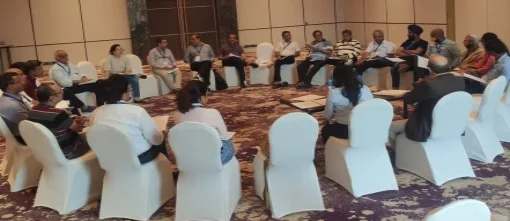
8. Workshop on New Look at Proven Principles of Professional Success held on Saturday 25th April 2026 & Saturday 09th May 2026 @ BCAS
The Human Resources Development Committee Organized this half-day workshop spread over two days The speaker Mr. Walter Vieira explained the various Proven Principles for Professional Success, especially considering the current circumstances today. Through a combination of lectures and group discussions, he brought out the practical aspects of challenges faced today and how proven principles can be adjusted to achieve success.
The takeaways from the workshop are briefly given below:
- How every CA needs to ideally convert the Profession into a passion.
- The Group dealt with the Pros and Cons for CA’s in different categories – Single/Partners/Senate/SMP.
- The Workshop also dealt with (i) The Role of an Independent (ii) The Role as an Independent and (iii) The Role of a Team Player. Participants were encouraged to assess their strengths and preferences to determine the role in which they can contribute most effectively
- The Workshop discussed the critical role of ethics in the profession, especially in the context of ‘Intrapreneurship’ and ‘Extrapreneurship’
- Working “Ethically” becomes much easier if each one subscribes to a list of Nine values articulated by Cyrus Vance were discussed at length.
- The session highlighted communication as one of the fundamental pillars of success across professions. It was discussed that communication can manifest in both overt and covert forms, each significantly influencing professional outcomes. Participants actively engaged in group discussions, sharing illustrative examples of both effective and ineffective communication practices. A presentation was also made on the themes of jealousy and envy, examining how these emotions often surface through communication patterns and can adversely impact professional relationships. It was observed that such factors have, in several instances, contributed to setbacks in the careers of professionals.
- Networking: The session also covered the importance of networking, with particular emphasis on building a strong managerial network to enhance professional performance and expand career opportunities. It further explored networking across various dimensions, including within the organization, the profession, peer groups at similar levels, and shared interests such as music and sports.
- How do you assess yourself- Additionally, participants were encouraged to undertake self-assessment to determine their preferred career path, whether to function as an independent professional or to operate within the structured environment of a corporate framework.
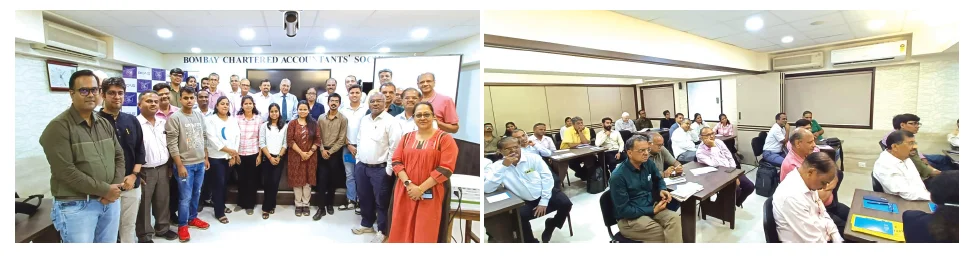
9. Direct Tax Home Refresher Course – 7 held on Saturday 25th April 2026 to Saturday 9th May 2026 @ Virtual
The Direct Tax Committee of BCAS successfully organized the Direct Tax Home Refresher Course 7 (DTHRC 7) jointly with 14 professional organizations from across the country, namely:
- Association of Chartered Accountants, Chennai
- Chartered Accountants Association, Ahmedabad
- Chartered Accountants Association Surat
- CA Association of Jalandhar
- The Chartered Accountants Study Circle, Chennai
- Hyderabad Chartered Accountants Society
- Karnataka State Chartered Accountants’ Association
- Lucknow Chartered Accountants’ Society
- Goa Chamber of Commerce and Industry
- Tax Practitioners’ Association, Indore
- Jaipur Chartered Accountants’ Group
- All India Federation of Tax Practitioners (Western Zone)
- Bbdbag Professional Association, Kolkata
- Maharashtra Tax Practitioners Association, Pune
The virtual refresher course was conducted over 7 days from 25 April 2026 to 9 May 2026 and comprised 14 technical sessions covering important and contemporary developments under the Income-tax Act, 2025 and allied tax laws.
The topics covered during the course included:
- Income-tax Act, 2025 – Structural Overview and Key Conceptual Changes vis-à-vis the Income-tax Act, 1961
- Technology, Artificial Intelligence and Data Analytics in Tax Practice
- Practical Issues relating to TDS/TCS – Outreach Programme
- TDS & TCS Regime under the Income-tax Act, 2025
- Salary Income under the New Income-tax Act, 2025 – Computation Framework, Deductions and Rules
- Business Income under the New Income-tax Act, 2025 – Computation Framework, Deductions and Emerging Controversies
- Issues under Corporate Taxation including MAT, Business Reorganisation, Buy-back and Tax Schemes for Corporates
- Presumptive Taxation – Practical Issues and Case Studies
- Foreign Assets of Small Taxpayers – Disclosure Scheme (FAST-DS 2026)
- Charitable Trusts Taxation – Recent Amendments, Registration and Compliance Requirements
- Capital Gains relating to Real Estate Transactions and Redevelopment Issues
- Transfer Pricing – Documentation and Safe Harbour Updates
- Penalty Provisions, Immunity Provisions and Decriminalisation under Income-tax Law
- Recent Important Judicial Decisions covering various provisions of Direct Tax Laws
The distinguished speakers shared their deep insights on the evolving tax landscape, particularly the implementation and interpretation of the Income-tax Act, 2025, practical challenges faced by taxpayers and professionals, and the latest judicial and legislative developments. Each session concluded with an interactive question-and-answer segment, enabling participants to engage directly with the faculty and seek practical guidance on complex issues.
The course witnessed enthusiastic participation of more than 1500 tax professionals, chartered accountants, advocates, and industry representatives from across India, reaffirming the significance of DTHRC as a premier knowledge-sharing platform in the field of direct taxation. The collaborative efforts of BCAS and the 14 participating associations contributed immensely to the success of the programme and strengthened professional learning across the country.
Speakers: The faculty for the course comprised eminent professionals and subject matter experts, including Adv. K.K. Chythanya, CA Karthikeya Shenoy, Mr. Amit K Singh (JCIT-TDS, Mumbai), CA Sandeep Kumar Jain, CA Ravikant Kamat, CA Bhadresh Doshi, CA Dhinal Shah, CA Pankaj Agarwal, CA Rishab Aggarwal, CA Deven Shah, CA Jagdish Punjabi, CA Riddhi Shah, Sr. Adv Dr. K. Shivaram & Adv. Rahul Hakani, Adv T. Banusekar
Scan to watch online at BCAS Academy

10. Indirect Tax Laws Study Circle Meeting on GST Issues in Manufacturing Sector held on Friday, 24th April 2026 @ Virtual.
The session was led by CA. Jinesh Shah (Group Leader) under the mentorship of Adv. (CA) Harsh Shah (mentor), and witnessed active participation from members across the fraternity.
The presentation covered the following aspects for a detailed discussion:
- GST Implications on Volume Discounts
It focused on GST implications of primary discounts, volume discounts, retail incentive schemes, secondary discounts and return of expired or obsolete goods. Deliberations were made on the valuation provisions under Section 15, treatment of credit notes, post-sale discount mechanisms and the impact of recent GST clarifications.
- Input Tax Credit (ITC) Challenges on Solar Power Plant
The Study Circle thereafter examined complex input tax credit issues arising in the context of captive solar power plants established by manufacturing companies. Deliberations centred around the GST implications of electricity generation, captive consumption through the power grid, sale of surplus electricity, admissibility of ITC on EPC contracts and the applicability of ITC reversal provisions under Sections 17(2), Rule 42 and Rule 43 of the CGST Rules
- Supply of moulds and dies by a manufacturer to outsourced vendors on a free-of-cost basis.
Discussions were made as to whether such arrangements constitute a supply under GST, the admissibility of ITC on moulds, valuation implications and the applicability of Circular No. 47/21/2018-GST. The valuation treatment of scrap retained by job workers and its possible characterization as consideration in kind also generated significant discussion.
- Eligibility of ITC on Expenses incurred for an Initial Public Offering
Discussions were made regarding whether IPO-related expenditure, such as merchant banker fees, legal expenses, listing fees and advertising costs, could be regarded as incurred in the course or furtherance of business and whether issuance of shares could be regarded as a transaction in securities requiring reversal of ITC under Section 17.
Around 147 participants from all over India benefited while taking an active part in the discussion. Participants appreciated the efforts of the group leader and the mentor.
11. ITF Study Circle Meeting on “Transfer Pricing Provisions under the New Income Tax Act, 2025 & Income Tax Rules, 2026 and Impact of the current Middle East crisis on Transfer Pricing” held on 23rd April 2026 @ Virtual.
The session commenced with the opening address by the session Chairman on the key aspects of the Transfer Pricing provisions under the New Income Tax Act, 2025. Subsequently, the Group Leader provided a detailed overview of the Transfer Pricing provisions of the New Income Tax Rules, 2026.
The participants discussed an issue regarding significant changes to the definition of ‘Associated Enterprises’ and debated the impact of the change, expressing divergent views.
The Group Leader discussed the changes in the forms under the New Income Tax Rules, 2026, dealing with the additional disclosures under the Transfer Pricing provisions The Group Leader discussed the nuances of the new Safe Harbour regime for software companies and its application. Further, the Group Leader discussed the impact of war and other significant economic events on Transfer Pricing and the approach to be adopted in determining arm’s length price. The participants debated the implications with many senior members sharing their past experiences in similar situations.
The session concluded with closing remarks by the Chairman of the session and the Group Leader.
Speaker: Chairman of the session – CA Natwar Thakrar, Group Leader – CA Namrata Dedhia
12. Future Ready CA Summit Vadodara held on Saturday 18th April 2026 @ Hotel Grand Mercure – Surya Palace, Vadodara
Under the BCAS Sherpa Initiative, the Society organized the full-day summit that brought together members and non-members to explore emerging opportunities, regulatory developments, and strategies for building future-ready professional practices.
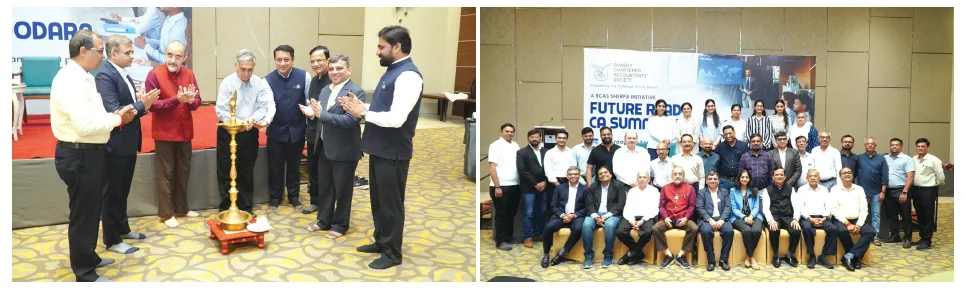
CA Zubin Billimoria, President of BCAS, and CA Kinjal Shah, Vice President of BCAS, addressed the participants and highlighted the significance of BCAS membership and the wide range of professional development initiatives undertaken by the Society.
CA Anand Sanghvi spoke on Strategic Practice Development – Domestic & Global Pathways for CA Firms, highlighting the need for firms to embrace global delivery models, technology, and cross-border competencies to remain competitive in an evolving professional landscape.
CA Chirag Doshi’s session on CA Firm’s Valuation focused on building institutional value through robust systems, processes, and intellectual capital, while providing insights into the key drivers of firm valuation.
A Brain Trust Session on case studies on Direct and Indirect Taxes, led by CA Anil Sathe and CA Jatin Harjai and ably moderated by CA Manish Baxi, provided practical insights into recent tax developments, judicial precedents, and emerging challenges in professional practice.
In line with the summit’s theme of being “Future Ready,” Adv. (CA) Kinjal Bhuta, Treasurer of BCAS, shared her perspectives on the transition of assessment provisions from the Income-tax Act, 1961 to the Income-tax Act, 2025 and its implications for tax professionals.
The summit featured engaging discussions, interactive Q&A sessions, and valuable networking opportunities, enabling participants to exchange ideas and gain practical insights. The event successfully reinforced the importance of strategic growth, continuous learning, and adaptability in preparing the profession for the future.
13. M&A Summit 2026 held on 17th April 2026 @ Ginger by Taj, Mumbai Airport.
The Finance, Corporate & Allied Laws Committee of BCAS organised the M&A Summit bringing together regulators, investors, legal professionals, transaction advisors and corporate leaders to discuss developments shaping the mergers and acquisitions landscape.
The summit was inaugurated by Chief Guest Mr. Deep Mani Shah, Chief General Manager, SEBI, who shared his perspectives on the evolving deal environment and the growing importance of governance, transparency and investor confidence in transactions.
Mr. Ashok Wadhwa, Group CEO, Ambit Private Limted, in his keynote address on “India’s M&A Outlook 2030: What’s Driving the Next Wave?”, shared perspectives on the evolving deal landscape, discussing the factors likely to shape M&A activity over the next decade, including consolidation trends, capital flows and strategic growth opportunities.
Discussions during the summit highlighted the evolving regulatory landscape, increasing investor participation and the growing complexity of transaction structuring in today’s deal environment.
Participants gained insights into key considerations influencing M&A transactions, including governance, financing, tax implications, ESG factors and cross-border regulatory challenges. The deliberations underscored the importance of balancing commercial objectives with legal, regulatory and stakeholder expectations while executing transactions.
Industry experts shared practical perspectives on value creation, risk management and successful deal execution in a dynamic business environment. The summit concluded with an engaging exchange of views on emerging opportunities, challenges and future trends shaping the Indian M&A ecosystem.
14. Multi-Stakeholder Workshop on Reforming Tax Policy Consultation in India held on Tuesday, 15th April 2026 @ Jolly Bhavan Hall – BCAS, Mumbai
The Bombay Chartered Accountants’ Society (BCAS) partnered with the Bharti Institute of Public Policy (BIPP), Indian School of Business (ISB), to host a one-of-its-kind – Multi-Stakeholder Workshop on “Reforming Tax Policy Consultation in India” on 15th April 2026 at BCAS Office, Mumbai.
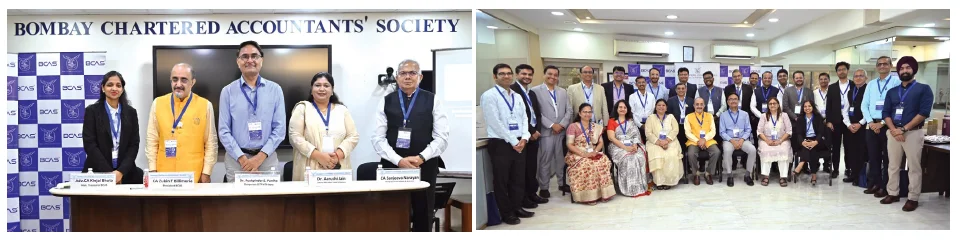
The workshop was organised as part of a larger research initiative by BIPP, ISB, promoted by the Consultative Group on Tax Policy (CGTP) at NITI Aayog, with the objective of developing a structured and inclusive framework for tax policy consultation in India. The Delhi leg of this initiative was held on 23rd February 2026 at India Habitat Centre, New Delhi where BCAS was invited and participated. The Mumbai workshop represented the second leg of stakeholder engagement, with BCAS as the proud partner.
The proceedings commenced with key note address by Dr. Pushpinder S. Puniha, Chairperson of the Consultative Group on Tax Policy at NITI Aayog who spoke for building a more consultative and collaborative policy ecosystem in India. This was followed by address of Dr. Aarushi Jain, Director Policy and Head, Government Affairs, at the BIPP, ISB, who emphasized the need to move from ad hoc consultation to a predictable process that strengthens trust between the government, the profession, and citizens.
The workshop was structured into two focused rounds of deliberation. The first round brought together senior tax practitioners to discuss the ground-level realities of how policy changes affect compliance and advisory work. The discussion provided suggestions on how the government could make consultations more structured and outcome-linked. The second round engaged corporate representatives of industry bodies. This group brought a complementary perspective — that of taxpayers navigating complex compliance landscapes while also trying to plan long-term investments.
Together, both rounds of discussion were practical, bringing in ground-level experiences, and provided recommendations that will provide meaningful inputs for a framework for tax policy consultation. The insights from the discussions will feed directly into the study’s final framework to be presented to NITI Aayog. The workshop reflected BCAS’s enduring commitment to advocacy and contributing constructively to public policy processes that positively impacts the profession.
15. “Empowering the Profession — A BCAS Outreach on Firm Growth & Income Tax Imperatives” event held on 11th April 2026 at ICAI Bhawan, Indore.
On the sidelines of BCAS 30th International Taxation and Finance Conference, the Society conducted an Outreach Program in Indore jointly with the Indore Branch of CIRC of ICAI and the Tax Practitioners Association, Indore.
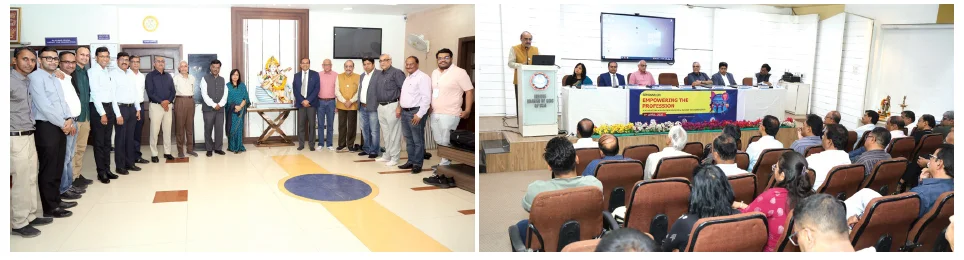
The program was conducted on Saturday, 11th April 2026 at the ICAI Bhawan Indore from 4.30 pm to 6.30 pm. CA Samkit Bhandari, Chairman of ICAI Indore Branch along with CA. Vijay Bansal, President TPA Indore gave the welcome address. The CA Megha Jain, Treasurer of the Indore Branch Moderated the program. Then the President of BCAS, CA. Zubin Billimoria addressed the participants in which he made them aware about various initiatives, courses, activities conducted by the Society.
CA Shariq Contactor, spoke on the topic “India’s Big Four Moment: Are we Ready to Lead the World?”.
His session was followed by panel discussion, where the panellists CA. Jagdish Punjabi and CA. Naman Shrimal along with CA. Manish Dafria as moderator, enshrined on important practical issues under the Income-tax Act revolving around following topics:
- Taxation of real estate transactions; and
- TDS & TCS.
The co-ordination for this Outreach Program was done by CA. Chaitanya Maheshwari and CA. Chirayu Sodani.
The program was attended by about 50 participants.
II. BCAS IN NEWS & MEDIA
- BCAS has been featured in several news and media platforms, showing our active involvement, professional contributions, and commitment to the field. This reflects the growing recognition of BCAS in the public and professional space.
Link: https://bcasonline.org/bcas-in-news/
QR code